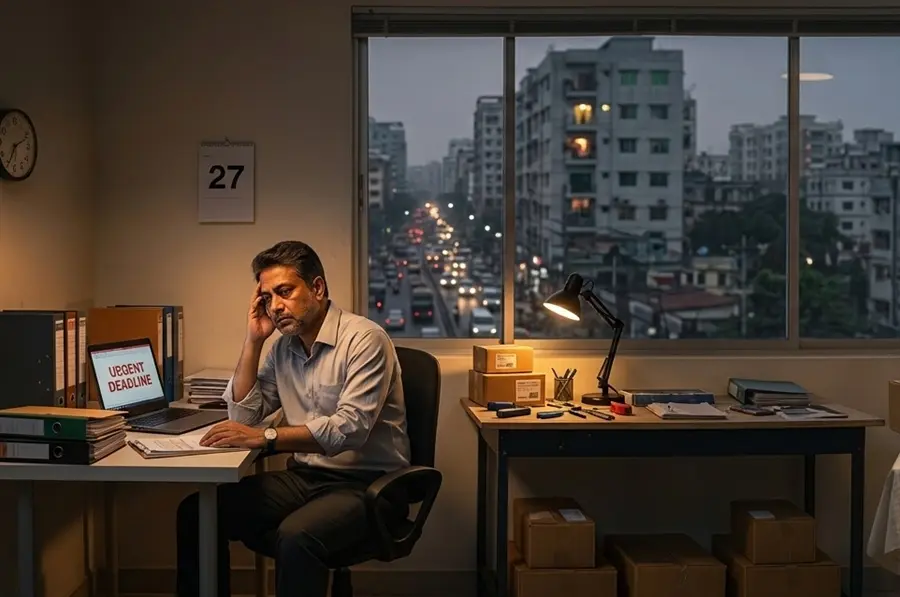
The Rise of Affordable Mental Health Ecosystems
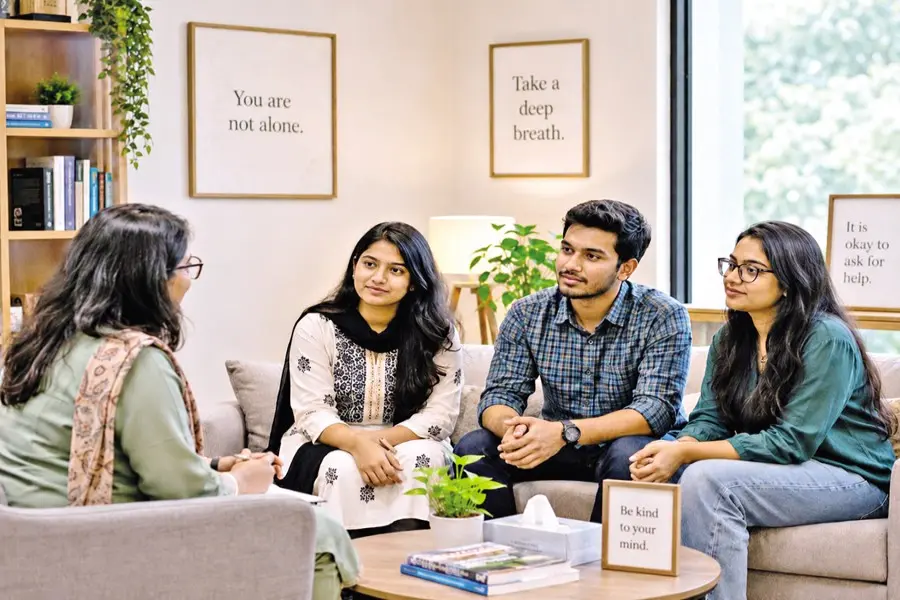
For many university students, the transition into higher education can be more destabilising than it appears from the outside.
Academic competition increases, familiar routines disappear and young people suddenly face decisions about relationships, finances, careers and their future while being expected to appear as though everything is under control.
Young professionals encounter a different version of the same pressure. Employment may provide financial stability, but it does not automatically resolve anxiety, isolation, burnout or other psychological difficulties.
Mental health has consequently become an increasingly important issue among students and young professionals in Bangladesh.
THE WEIGHT OF SILENCE
One of the biggest obstacles remains stigma.
Many young people struggle for months or even years before recognising that what they are experiencing may require psychological support.
Mental health vocabulary is still unfamiliar in many households. Emotional distress may instead be described simply as stress, tiredness or a temporary problem that should eventually disappear.
That can delay help-seeking until difficulties have become considerably harder to manage.
Cost creates another major barrier.
Traditional professional psychological services can be beyond the budget of many students. The article reports that a session with a senior clinical psychologist may cost between Tk 2,000 and Tk 5,000 or more.
Some universities have introduced counselling services, but availability and student awareness remain uneven.
Outside conventional institutional structures, however, another ecosystem has gradually begun to develop.
A combination of volunteer helplines, non-profit organisations, independent mental health initiatives and lower-cost professional services is attempting to narrow the gap between people who need support and those who can afford conventional private care.
THE FREE SUPPORT LAYER
At the most accessible end of this ecosystem are free listening and crisis-support services.
Kaan Pete Roi operates as a tele-counselling and emotional-support service, while initiatives including Purple Line, Mindspace and Pashe Achi provide different forms of crisis or listening support.
Such services are not necessarily substitutes for professional psychotherapy.
Their immediate value can instead lie in giving someone a person to speak to during a difficult moment and, where necessary, helping connect them with further professional assistance.
For someone experiencing severe emotional distress late at night, simply having access to a trained listener can become an important first point of contact.
Demand for such services also demonstrates the scale of unmet mental health needs.
THE AFFORDABILITY GAP
Between free helplines and higher-cost clinical services, a growing range of lower-cost options has emerged.
According to the article, Nirban offers an active-listening option at Tk 200, with professional therapy available at higher rates.
Identity Inclusion provides psychosocial support, including sessions reported at Tk 1,000 for 90 minutes and lower-cost group discussions, with a focus that includes neurodivergent people and young clients.
Aanchol Foundation runs mental health awareness activities and a supervised online Listening Room, while affiliated psychologists are reported to provide sessions within a lower-cost range.
Other providers, including Restart Mental Health, Psycoach Bangladesh and MindWizz, offer different professional services across a wider range of prices depending on the type of session and experience of the practitioner.
The emergence of these services is important because affordability can determine whether a young person seeks help at all.
A session that remains within the budget of a student or recent graduate can substantially reduce the financial threshold for taking that first step.
NOT ALL SERVICES ARE THE SAME
Growth, however, should not automatically be interpreted as quality.
Mental health services require appropriate professional boundaries, confidentiality, training, supervision and clear procedures for referring people who need specialised or emergency care.
Experiences across independent services can vary.
Volunteer-led emotional support, counselling and clinical psychotherapy are also different forms of intervention and should not be presented as interchangeable.
The wider ecosystem therefore faces an important credibility challenge: users need to understand who is providing a service, what qualifications they have, what type of support is being offered and what safeguards exist.
Limited regulatory oversight can make those distinctions difficult for ordinary users.
Public visibility and positive testimonials alone cannot establish the clinical quality of a mental health service.
Greater transparency around professional qualifications, supervision, confidentiality, complaint handling and referral procedures would help users make more informed decisions.
A CHANGING GENERATION
Despite these limitations, something important is changing.
Young Bangladeshis appear increasingly willing to talk about emotional distress, therapy, anxiety, depression and psychological wellbeing in ways that previous generations often were not.
That cultural change is creating demand.
The response is gradually expanding beyond conventional one-to-one counselling. Group-based support and creative approaches involving art and music are becoming part of the broader conversation around mental wellbeing.
There have also been examples of mental health professionals and trained volunteers responding directly to periods of social crisis.
Following the July 2024 uprising, for example, the Human Rights Development Centre in Mohammadpur deployed trained psychology volunteers to communities affected by violence, according to the article, with psychological first aid followed by professional support in relevant cases.
WHAT COMES NEXT
Bangladesh’s emerging affordable mental health ecosystem remains incomplete.
Professional quality is uneven, awareness remains limited and many people who are most vulnerable may still be the least able to find appropriate help.
Free listening services cannot replace psychiatrists or qualified psychologists when clinical intervention is required. At the same time, specialist clinical care alone cannot meet the country’s enormous demand for accessible mental health support.
A stronger ecosystem therefore needs different levels of care working together.
Helplines can provide immediate listening and crisis support. Universities can strengthen campus counselling. Qualified professionals can provide assessment and therapy. Community organisations can improve awareness and referral. Clearer standards can help people distinguish between these services.
Affordability must also remain central.
If professional support exists but remains financially inaccessible to the people who need it, the treatment gap will persist.
The encouraging development is that young people today have more places to seek support than they did several years ago.
The system is far from mature, but the combination of lower-cost services, volunteer initiatives, professional care and greater willingness to discuss mental wellbeing represents the beginning of a broader change.
For a student or young professional struggling alone and unsure whom to tell, having an accessible first door to knock on can matter enormously.
Bangladesh now needs to ensure that the door leads to support that is not only affordable, but also ethical, transparent and professionally appropriate.